
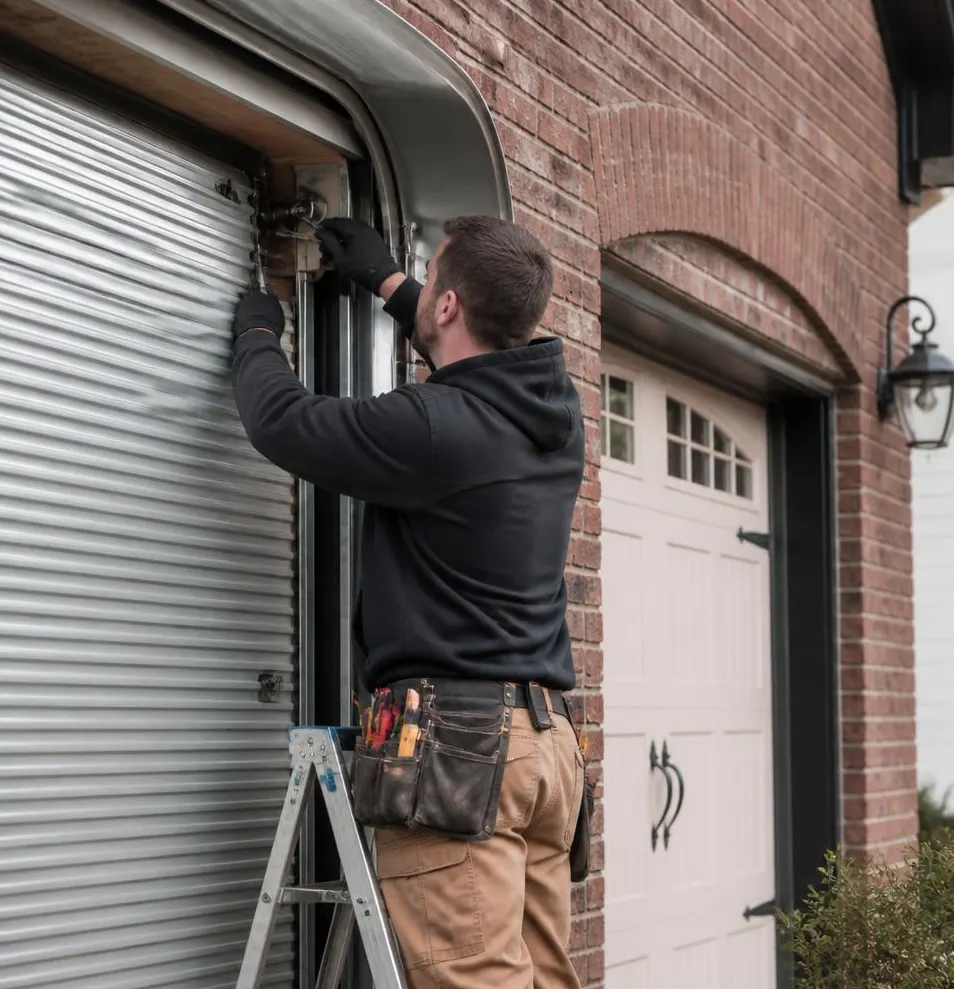
What Another Season of Waiting Really Costs You
A garage door spring doesn't send a warning text before it fails. One day it's doing its job, holding up to 300-400 pounds of door, and the next day it's a sharp crack in the garage followed by a door that either won't budge or comes crashing down. Put off a spring that's already showing wear through another humid summer and another round of storm season winds, and you're not saving money — you're trading a scheduled repair for an emergency one, usually at a higher cost, sometimes with a damaged door panel or opener motor thrown in, and occasionally with an injury if someone's hands or feet are near the door when it lets go.
Here's the good news: springs almost always give you signs first. You just have to know where to look.
Torsion vs. Extension Springs — Know Which One You Have
Before you start checking, figure out what's installed. Torsion springs sit on a metal bar directly above the closed door, usually one or two thick coiled springs. Extension springs run along the horizontal tracks on either side of the door, stretching and contracting as the door moves. The wear signs overlap, but where you look differs.
The Walk-Through Checklist
- Visible gaps in the coils. Stand under the door (with it closed and the opener disconnected) and look at the spring itself. A gap that's wider than normal between coils, or a spring that looks stretched out of shape, means the metal has already lost tension it won't get back. That's a sign the spring is nearing the end of its cycle life, not just cosmetically worn.
- Rust or pitting on the coils. Florida humidity and afternoon downpours get into garages more than most homeowners realize, especially if there's any gap at the bottom seal or the garage isn't fully climate controlled. Rust eats into the metal's surface, creating weak points where the spring is more likely to snap under tension rather than wear evenly.
- A popping or grinding sound during operation. Smooth springs move quietly. A spring that's losing integrity often announces itself with a pop, a scrape, or a grinding noise right as the door starts or stops.
- The door feels heavier than it used to. If you disconnect the opener and lift the door by hand (always a good test to do occasionally), it should feel roughly balanced and move with moderate, even effort. If it suddenly feels like dead weight, the spring isn't carrying its share of the load anymore.
- The door won't hold a halfway-open position. This is the single best DIY balance test. Disconnect the opener, lift the door to the halfway point, and let go. A healthy spring will hold the door roughly in place. If it drifts down or shoots up, the spring tension is off — and that imbalance puts extra strain on the opener motor too.
- Visible fraying or looseness in the cables. Cables work with the springs to control the door's descent. Frayed strands, slack cable, or a cable that's slipped off its drum often means the spring system is already under abnormal stress trying to compensate.
- The door looks crooked or jerky in motion. One spring working harder than its partner (common when only one has started to weaken) makes the door tilt to one side as it travels, or jerk instead of gliding smoothly.
- You don't know the spring's age. Most springs are rated for a set number of open-close cycles, and many hold up for roughly 7 to 10 years under normal use. Humidity swelling and rust exposure in Lake County garages can shorten that. If you've never replaced them and don't know how old the door is, treat age itself as a warning sign worth checking.
If You Checked Two or More Boxes
One warning sign alone might be nothing. Two or more, especially rust paired with noise, or an imbalance paired with visible wear, means the spring is actively failing and the timeline for a safe replacement is measured in weeks, not months — particularly heading into a season with more storm activity and wind load on the door.
When to Call Howey-in-the-Hills Garage Door Pro
If your checklist turned up rust, gaps, imbalance, or a door that won't hold halfway, it's time to get it looked at before the spring decides the timing for you. Our Garage Door Spring Repair service replaces worn torsion or extension springs with correctly matched, properly tensioned hardware — not a mismatched quick fix. If you're not sure what you're looking at or just want peace of mind before storm season peaks, our Garage Door Maintenance & Tune-Up visit covers a full spring, cable, and balance inspection so small wear gets caught early.
Serving Howey-in-the-Hills, Tavares, Astatula, Leesburg, Eustis, Mount Dora, Clermont, and Minneola — call Howey-in-the-Hills Garage Door Pro today and get your springs checked before they check out on you.